



Elsa: Gustare la Grazia Elisabettiana e il Fascino Duraturo di Questo Popolare Nome Nordico
Dare un nome a vostro figlio è come dipingere su una tela bianca: è una scelta carica di significato, amore e il sogno di un futuro luminoso. Tra la miriade di nomi che risuonano nelle valli scandinave, "Elsa" si distingue come un faro di grazia elisabettiana e fascino nordico.
Indice
- Indice
- Un breve viaggio nella storia
- Una lettera d’amore al presente e al passato
- Un legame tra culture
- Una decisione del cuore
- Domande frequenti
Un breve viaggio nella storia
Elsa, un nome che sussurra di antiche foreste e storie intrecciate nella tradizione, porta con sé una storia ricca come le luci del Nord che danzano nei cieli invernali. Originariamente un diminutivo del nome Elizabeth, che significa "promessa a Dio", Elsa è fiorito nel corso dei secoli in una scelta distinta, ricca di bellezza e semplicità.
Nel contesto delle culture nordiche, Elsa non è solo un nome; è un arazzo che intreccia fili di eleganza e patrimonio. Questo nome evoca un’estetica senza tempo che risuona di purezza e serenità—qualità che ogni genitore desidererebbe donare al proprio bambino.
Una lettera d’amore al presente e al passato
Scegliere Elsa per vostro figlio è come scrivere una lettera d’amore sia al presente vibrante sia al passato ricco di storia. Questo nome porta con sé una promessa, un’eredità di forza intrecciata con dolcezza—un ricordo di ciò che è stato e della magia che il futuro riserva.
Nella tradizione scandinava, Elsa riflette il profondo legame con il mondo naturale. "Un nome per un bambino dovrebbe portare gli echi della terra e i sussurri del cielo," disse Hans Christian Andersen. In effetti, Elsa è come il vento del Nord, gentile ma duraturo, morbido ma potente.
Un legame tra culture
Elsa trascende i confini, offrendo un nome che è tanto familiare e rassicurante quanto senza tempo. Pur radicato fermamente nelle tradizioni nordiche, ha conquistato i cuori in tutto il mondo, simboleggiando un abbraccio sia dell’identità personale sia culturale.
È interessante notare come si possano trovare parallelismi tra il fascino di Elsa e il nome norreno Gudrun, con i suoi echi di forza, e Ylva, noto per il suo legame con la natura e il potere intrinseco.
Una decisione del cuore
Da Oli Prik Copenhagen comprendiamo che scegliere un nome come Elsa è un atto d’amore. Simboleggia non solo le vostre speranze per il futuro del vostro bambino, ma anche un profondo legame con una cultura che valorizza la semplicità, l’autenticità e la bellezza senza tempo. State scegliendo più di un semplice nome; state scegliendo una narrazione, un’eredità, un lascito.
Mentre riflettete su questa decisione, godetevi la gioia del percorso e le storie che nomi come Elsa incarnano. Perché in questi nomi non risiede solo l’identità, ma anche i fili d’amore, tradizione e speranza che avvolgeranno il vostro piccolo per tutta la vita.
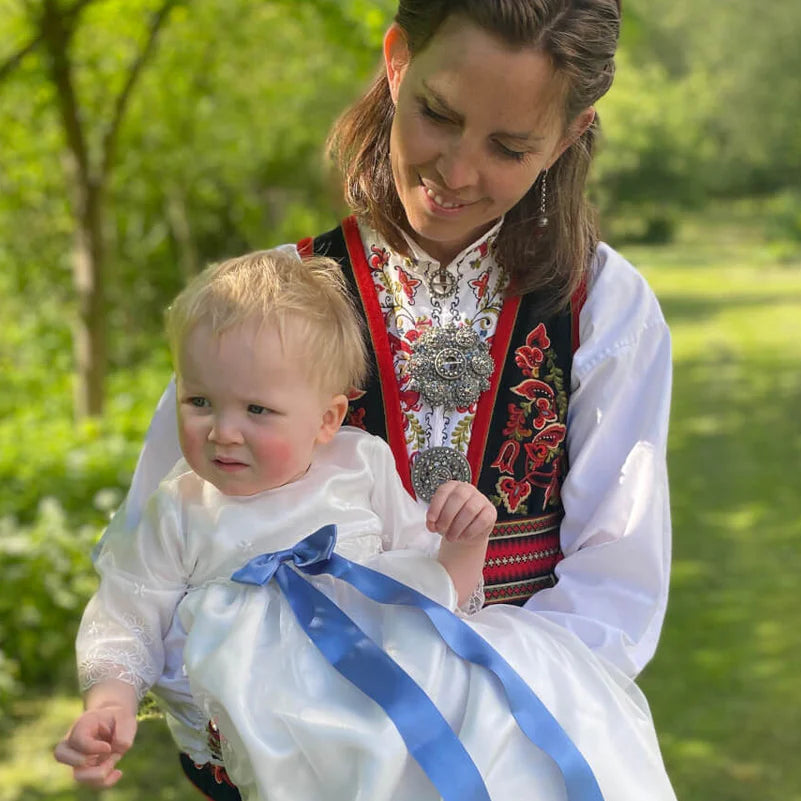
Scoprite di più su come le nostre tuniche da battesimo scandinave e gli accessori per bambini incarnano perfettamente questo spirito visitando Oli Prik Copenhagen. Avanzate con noi nell’abbraccio della splendida tradizione nordica che è Elsa.
Domande frequenti
Qual è l’origine del nome Elsa?
Il nome Elsa ha radici in diverse culture, derivando principalmente dal nome germanico Elisabeth, che significa "promessa a Dio". Nel tempo si è evoluto in diverse lingue ed è rimasto popolare nei paesi nordici.
Perché Elsa ha guadagnato popolarità negli ultimi anni?
Elsa è diventato molto popolare soprattutto grazie alla sua associazione con media popolari, come film d’animazione che rappresentano personaggi femminili forti e indipendenti. Questa rappresentazione culturale risuona con i valori moderni, rendendo il nome attraente per molti genitori.
Cosa significa il nome Elsa?
Il nome Elsa evoca spesso connotazioni di grazia, bellezza e forza. Riflette le qualità delle sue figure storiche e letterarie, simboleggiando un mix di eleganza e resilienza caratteristico sia della tradizione scandinava sia della società contemporanea.
In che modo le influenze culturali modellano il fascino del nome Elsa?
Le influenze culturali accrescono il fascino del nome Elsa incorporando temi di avventura, indipendenza e empowerment. Questi temi risuonano con i genitori che desiderano dare ai loro figli nomi che ispirino fiducia e individualità.
Esistono figure storiche famose di nome Elsa?
Sì, ci sono figure notevoli nella storia con il nome Elsa, tra cui Elsa von Freytag-Loringhoven, un’artista e poetessa pioniera. Questi individui contribuiscono alla profondità e alla risonanza del nome in vari campi come arte e letteratura.
Elsa è comunemente usato come nome autonomo o è tipicamente un soprannome?
Pur potendo essere un soprannome di Elisabeth o nomi simili, Elsa è diventato ampiamente accettato come nome autonomo. La sua semplicità ed eleganza lo rendono una scelta desiderabile di per sé.
Quali sono alcune varianti del nome Elsa?
Varianti del nome Elsa includono Elza, Elise ed Elspeth. Questi derivati condividono radici e significati simili offrendo diverse sfumature fonetiche che possono piacere a gusti diversi.
In che modo chiamare un bambino Elsa si collega alle tradizioni familiari?
Chiamare un bambino Elsa può collegarsi alle tradizioni familiari onorando le generazioni passate o riflettendo il patrimonio culturale. Può servire a preservare la storia abbracciando al contempo i sentimenti moderni legati ai nomi.
Quali sono alcuni nomi di mezzo che si abbinano bene con Elsa?
Bellissimi nomi di mezzo che completano Elsa includono Marie, Grace, Kate e Rose. Queste combinazioni esaltano l’eleganza del nome mantenendo un’armonia nel suono completo del nome.


 Andorra
 Arabia Saudita
 Argentina
 Australia
 Austria
 Bahrein
 Belgio
 Brasile
 Canada
 Cipro
Cipro
 Città del Vaticano
 Croazia
 Danimarca
 Emirati Arabi Uniti
 Estonia
 Finlandia
 Francia
 Germania
 Gibilterra
 Groenlandia
 Irlanda
 Islanda
 Isole Fær Øer
 Italia
 Kuwait
 Lettonia
 Liechtenstein
 Lituania
 Lussemburgo
 Malta
Malta
 Monaco
 Norvegia
 Nuova Zelanda
 Oman
Oman
 Paesi Bassi
 Polonia
 Portogallo
 Qatar
Qatar
 Regno Unito
 San Marino
 Slovacchia
 Slovenia
 Spagna
 Stati Uniti
 Svezia
 Svizzera
 Ungheria
