


Family Heirloom Christening Clothes: Care Guide
Updated on: 2026-07-22
Choosing family heirloom christening clothes can feel both exciting and a little overwhelming, especially when you want something meaningful and practical. In this guide, you will find clear ways to plan for comfort, fabric, fit, and care so the outfit can be worn with confidence. You will also get a buyer’s checklist and answers to common questions about materials, sizing, and storage. With thoughtful preparation, your keepsake can stay beautiful for years to come.
- Common Mistakes
- Buyer’s Checklist
- Materials and Fit Considerations
- Care and Storage for Longevity
- Design and Sentiment Ideas
- FAQ Section
- Wrap-Up & Final Thoughts
Common Mistakes
Many families begin with a kind idea: selecting special clothes that can be passed down. Yet a few common oversights can make that plan harder later. A careful approach helps you avoid stress during the christening and after.
Choosing a beautiful fabric without checking how it feels on a baby’s skin.
Buying based on age alone, instead of considering growth patterns and seasonal fit.
Ignoring care instructions, especially if delicate trims or lace are involved.
Forgetting practical details like closures that are easy to manage during dressing.
Storing keepsakes in ways that trap moisture or attract dust.
Prioritizing appearance over comfort, which can affect how the baby tolerates wear.
If you are aiming for heirloom-quality results, it often helps to think beyond the ceremony. Consider how the outfit will look after washing, how it will be handled for photos, and how it will be stored until the next family member is ready.
Buyer’s Checklist
Before you choose, you can use this simple checklist. It is designed to keep the process calm and organized. You may not need every item, but it can guide your decision.
Fabric comfort: Look for soft, gentle materials and pay attention to how seams feel.
Breathability: Consider temperature comfort for the season and indoor setting.
Fit range: Choose styles that allow easy movement and adjustment.
Closures: Prefer options that are easy to use and do not create bulky pressure points.
Decoration placement: If there are trims, check that they will not scratch or snag.
Durability: Confirm that the fabric and stitching can handle repeated gentle cleaning.
Care method: Make sure the care routine matches what you can realistically maintain.
Memory value: Think about what details you want to preserve for the family story.
Storage plan: Plan how you will store the outfit so it stays fresh for years.
As you review these points, you may find yourself returning to one key theme: comfort. When the fabric is kind and the fit is thoughtful, the outfit becomes easier to wear and easier to keep.
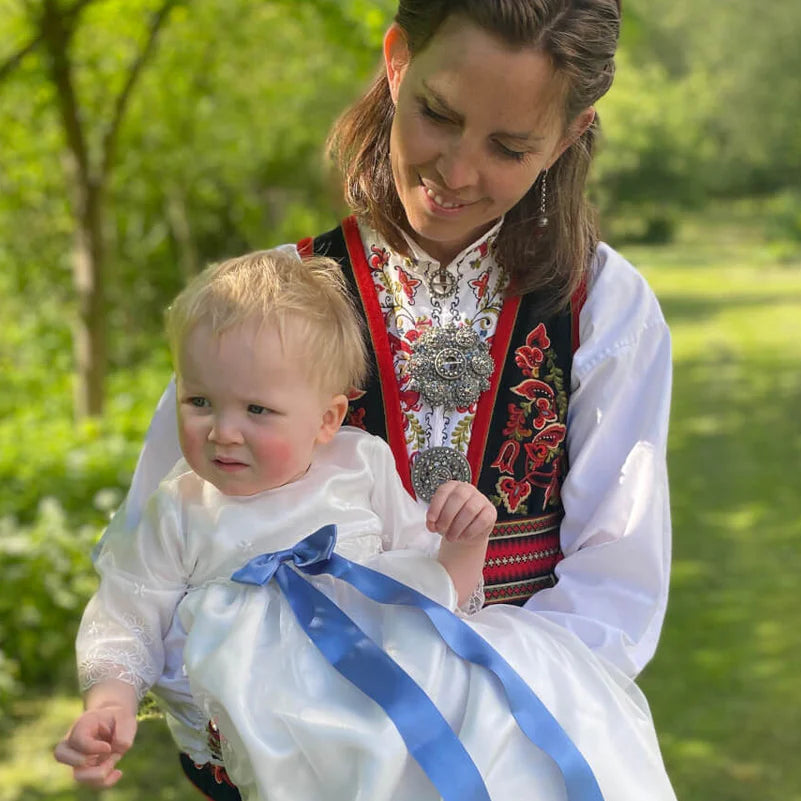
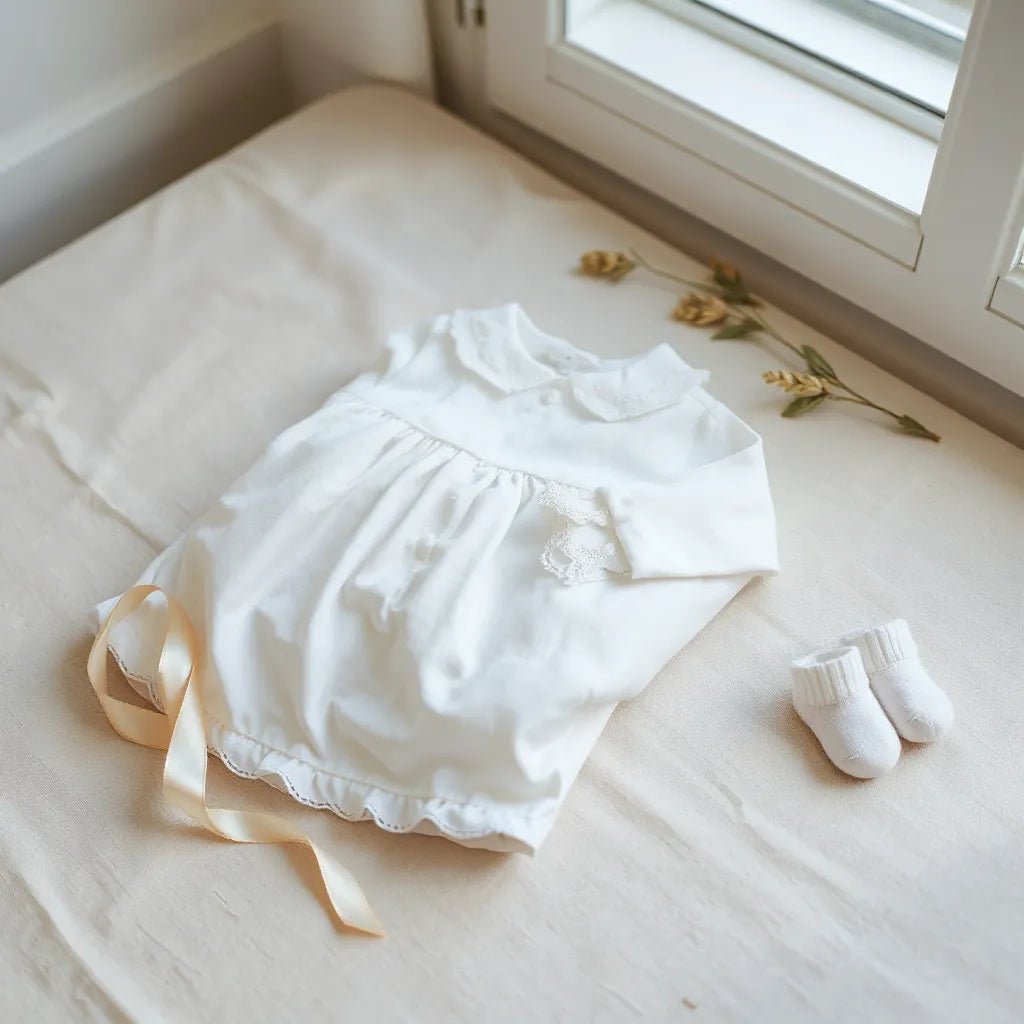
Soft fabrics, gentle seams, and careful closure layout
Materials and Fit Considerations
When people talk about heirloom pieces, they often think about craftsmanship and design. Those elements matter, of course. Still, the day-to-day experience is shaped by materials and fit. A family keepsake should feel comfortable during the christening and remain manageable for future wear.
What to look for in fabric
Soft natural fibers are a common starting point. They tend to feel gentle and can be breathable for many seasons. If your choice includes lace or embroidered elements, check whether the pattern is laid flat and whether the backing feels smooth against the skin.
It can also help to consider fabric stability. Some fabrics keep their shape better than others, especially around cuffs, collars, and hems. If you plan to re-wear the outfit later, stability supports an even appearance after cleaning.
How to think about fit
For fit, focus on both comfort and ease. Babies move in unexpected ways, so outfits that restrict movement can feel stressful. Look for designs that allow flexibility at the arms and legs, while keeping the overall look tidy for photos.
Closures deserve a moment of attention. Options that make dressing quick can reduce time spent handling the outfit. At the same time, consider the placement of closures so they do not create noticeable pressure points.
Season and timing considerations
The ceremony setting can influence material choice. A breathable layer can be helpful for indoor warmth, while a slightly thicker knit or lined style may suit cooler conditions. Even if the exact weather changes, the guiding idea stays the same: select an outfit that supports comfort for the time you will be wearing it.
Care and Storage for Longevity
Care is where heirloom plans become real. Even well-made clothes can lose their beauty if they are cleaned in a way that harms the fabric or weakens delicate details. A gentle, consistent routine helps the outfit remain ready for future family moments.
Washing and cleaning basics
Start by following the care instructions that come with the garment. If there are delicate trims, consider whether spot cleaning is sufficient for small marks. For full cleaning, choose the gentlest suitable method and avoid harsh treatments that may fade embroidery or loosen threads.
If the outfit includes lace or intricate stitching, you may want to avoid aggressive agitation. Instead, aim for a careful cleaning approach that preserves texture and shape. After washing, proper drying matters too. Air drying in a shaded area is often the most protective option for delicate fibers.
Preventing wear from handling
Heirloom clothes often spend time folded, unwrapped, and rehandled. That is normal, but you can reduce stress on the fabric. Store the outfit in a way that supports the shape and reduces repeated bending at the same points. When taking it out for photos, consider handling gently and limiting how long it stays on a surface that could collect dust.
Storing keepsakes safely
For storage, keep the outfit clean and completely dry before putting it away. Use breathable storage options that reduce dust while avoiding moisture trapping. A simple approach is to store it in an acid-free tissue wrap and place it in a closed container that protects from light.
Light exposure can gradually affect some fibers over time. For that reason, storing in a darker space is often helpful. Also, consider labeling the storage container with the family context, such as the year and the child’s initials. That kind of detail can make future handovers feel especially personal.
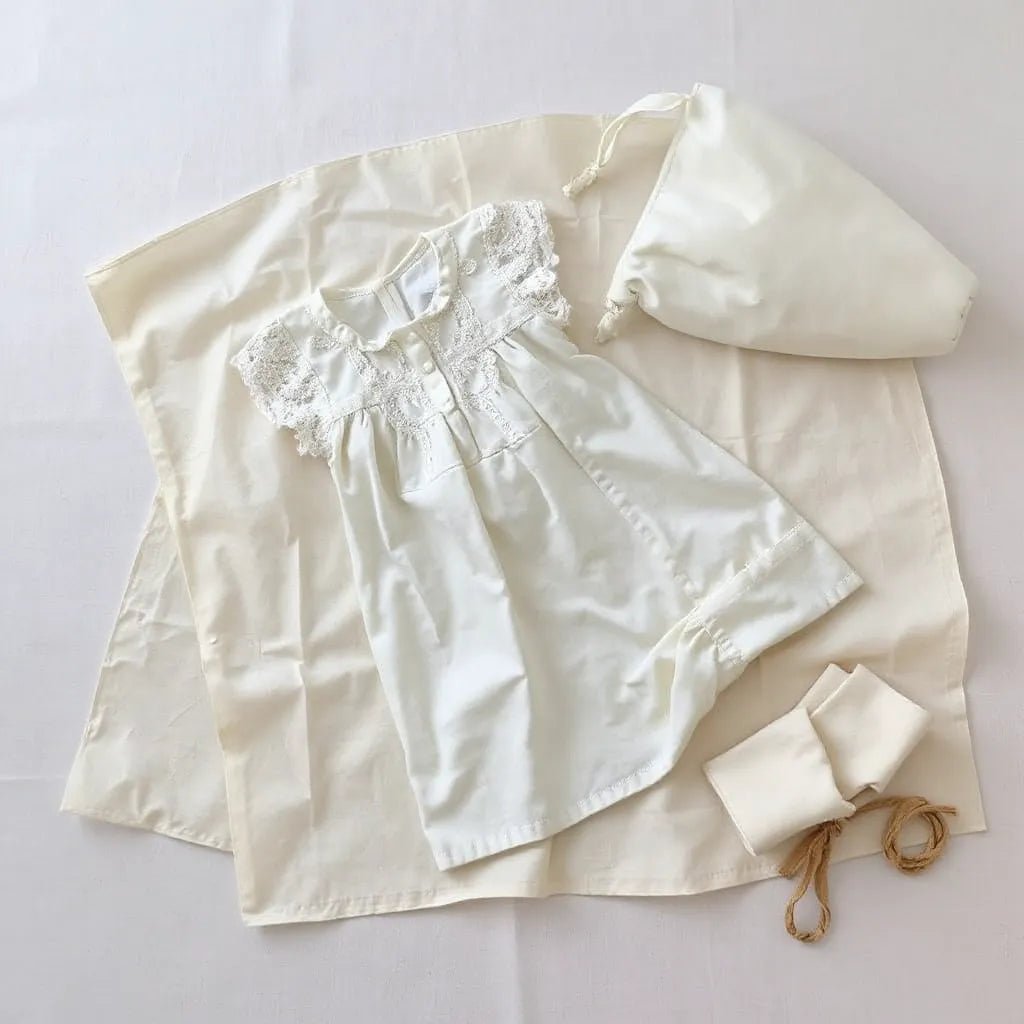
Fold lines protected with tissue, then sealed in storage
Design and Sentiment Ideas
Family heirloom christening clothes are not only garments. They are part of a story. Many families look for details that connect generations, such as classic silhouettes, meaningful embroidery, or a color palette that fits family traditions.
Classic styling that photographs well
Timeless shapes often remain attractive across years and different photo styles. A softly structured outfit with simple lines can look elegant in both traditional portraits and modern casual photos. If you aim for heirloom appeal, choosing a look that stays classic can reduce the risk of it feeling outdated.
Personal touches that still feel wearable
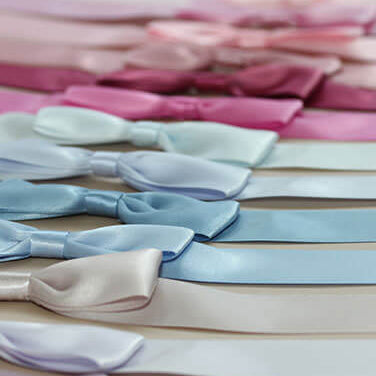
Sentiment does not have to mean complicated. Small personal touches can carry strong meaning, such as a subtle monogram, a ribbon detail, or a family pattern. The key is to select embellishments that remain comfortable and durable after careful cleaning.
Some families also match the outfit to a wider set of christening items, such as a keepsake box or photo frame. While the outfit is the focus, pairing it with a thoughtful storage or presentation approach can make the day feel even more complete.
Choosing what to preserve
It can be helpful to decide what matters most to you. Some people focus on lacework, others on fabric texture, and others on overall comfort. When you prioritize one or two features, it becomes easier to shop with confidence and avoid getting pulled in too many directions.
FAQ Section
How do I choose the right size for family christening clothes?
For the best fit, consider growth patterns and the season of wear. A slightly adjustable design can help with comfort on the day and flexibility for future use. If the garment has any measurement guidance, using it as a reference is often more helpful than relying only on age.
What fabrics work best for a keepsake outfit that will be worn again?
Many families prefer soft natural fibers and stable blends that hold their shape. If the outfit includes decorative elements like lace or embroidery, smooth placement against the skin is important. Durable stitching and care-friendly materials can also make future wear feel more comfortable.
How should I store christening clothes so they stay in good condition?
Store the outfit clean and fully dry. Use breathable protection such as acid-free tissue wrap, and keep it in a closed container away from direct light. Gentle handling when removing it for photos can also reduce wear on seams, hems, and delicate trims.
Can a special christening outfit be cleaned without damaging delicate details?
In many cases, yes, as long as you follow the care instructions. For small marks, spot cleaning may be enough. For full cleaning, choose the gentlest suitable method and avoid harsh treatments. If you are unsure, you may want to test a careful approach on an unobtrusive area first.
Wrap-Up & Final Thoughts
Choosing family heirloom christening clothes is a meaningful decision. With a clear checklist, thoughtful attention to materials and fit, and a gentle care plan, you can create a keepsake that feels comfortable on the day and remains beautiful for years. The small details—soft seams, easy closures, and storage that protects fabric—often make the biggest difference over time.
If you would like to explore more about thoughtful baby and family gifting, you may find inspiration on Oliprik. When you are ready, take your time and choose the features that align with your family’s priorities and care routine.
Thank you for considering an heirloom approach. With care and patience, your christening outfit can become a lasting part of family memories.
Q&A Section
Is it better to buy a ready-made heirloom outfit or create one from separate pieces?
Both approaches can work well. Ready-made outfits often offer a coordinated look and matching comfort elements. If you assemble separate pieces, you can focus on each component’s fit, feel, and longevity, but it may take more planning to ensure everything works together comfortably.
What details usually indicate higher craftsmanship for keepsake clothes?
Look for clean seams, even stitching, and trims that feel secure. Fabric consistency matters too, especially around hems and cuffs. When decorations are positioned smoothly and closures work reliably, the outfit is more likely to remain wearable and beautiful over time.
How can I keep the outfit looking elegant after repeated handling?
Gentle handling is often the easiest way. Use careful folding practices that reduce stress at the same points, and consider protective wrapping before placing it into storage. When you remove it, support the garment fully so seams and delicate sections are not pulled or creased.
About the Author
Hallur Saevarsson is a thoughtful writer focused on family celebrations, keepsake planning, and practical shopping guidance for meaningful occasions. With a careful eye for comfort, fabric behavior, and long-term care routines, Hallur helps readers make choices that feel both special and manageable. Thank you for reading, and may your family’s christening moment feel warm, memorable, and beautifully prepared.
 Andorra
 Argentina
 Australia
 Austria
 Bahrain
 Belgium
 Brazil
 Canada
 Croatia
 Cyprus
 Denmark
 Estonia
 Faroe Islands
 Finland
 France
 Germany
 Gibraltar
 Greenland
 Hungary
 Iceland
 Ireland
 Italy
Italy
 Kuwait
 Latvia
 Liechtenstein
 Lithuania
 Luxembourg
 Malta
Malta
 Monaco
 Netherlands
 New Zealand
 Norway
 Oman
Oman
 Poland
 Portugal
 Qatar
Qatar
 San Marino
 Saudi Arabia
 Slovakia
 Slovenia
 Spain
Spain
 Sweden
 Switzerland
 United Arab Emirates
 United Kingdom
 United States
 Vatican City
